


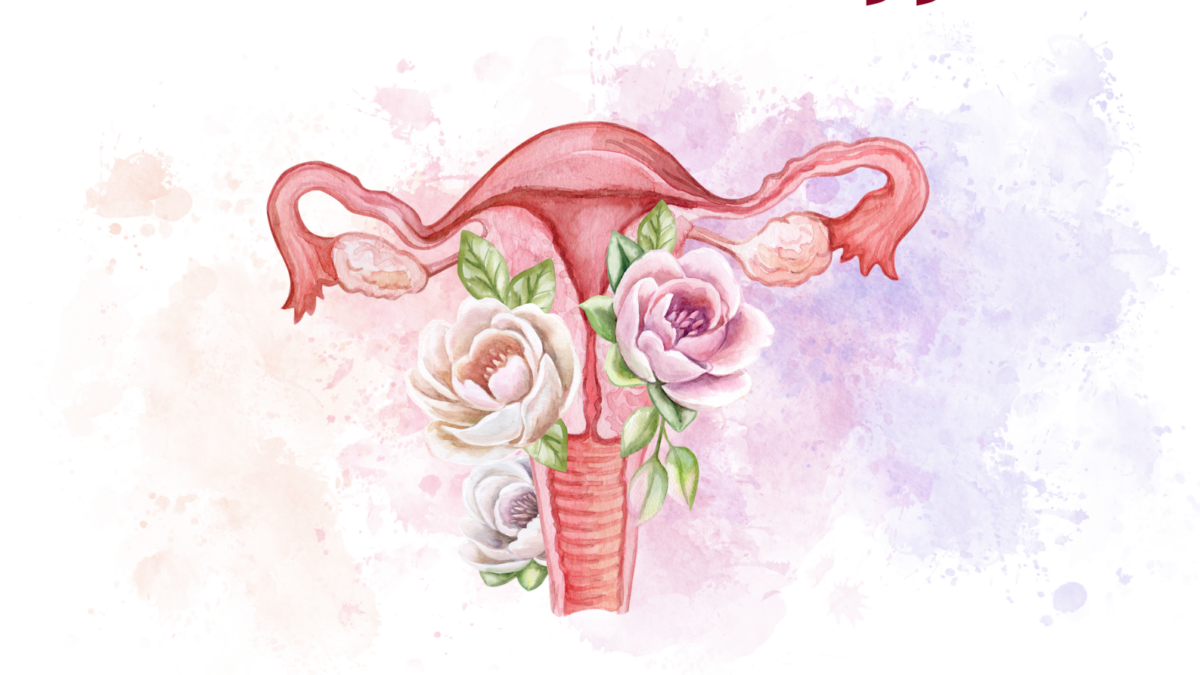
June is Uterine Cancer Awareness Month. How much do you know about it?
When we think about gynaecologic cancers in East Africa, the conversation almost always starts and ends with cervical cancer. And for good reason. Our region carries one of the highest cervical cancer burdens in the world.
But while we have been focused there, another gynaecologic cancer has been quietly climbing.
Uterine cancer.
Most women and even some clinicians may not know about it.
What is uterine cancer?
Uterine cancer is cancer that starts in the womb. The most common type is endometrial cancer which arises from the inner lining of the uterus and accounts for about 90% of all cases. (1) The second type, uterine sarcoma, is rarer but more aggressive, developing in the muscle wall of the uterus and harder to detect early.
Globally, over 420,000 people are diagnosed with uterine cancer every year, and that number is projected to grow by 50% by 2044. (1) East and Southern Africa are expected to account for 42.4% of Africa’s new endometrial cancer cases, about 11,500 out of 27,100, by 2040, despite making up only about a third of the continent’s population. (2) We are disproportionately in the path of this rising tide.
Why is uterine cancer rising here?
Uterine cancer has historically been considered a disease of wealthy, Western countries, associated with obesity, sedentary lifestyles, and post-menopausal women. But those risk factors are no longer exclusive to the high-income countries.
Urbanisation across East Africa is rapidly changing how we eat, how we move, and how our bodies are exposed to hormones over time. The rates of obesity, type 2 diabetes, and hypertension, all linked to elevated oestrogen levels that drive endometrial cancer, are increasing steadily in our region. (3)
Obesity increases the risk of uterine cancer because fat tissue produces oestrogen, and prolonged oestrogen exposure without adequate progesterone can stimulate abnormal cell growth in the uterine lining.
A seven-year institutional study in Kampala found that endometrial cancer was present in 11.9% of non-pregnant women presenting with abnormal uterine bleeding, and notably, the majority of those patients were premenopausal women, with a mean age in the mid-thirties. (4) This challenges the assumption that we in East Africa are somehow protected, or that uterine cancer is only a concern after menopause. It is not.
There is no screening test
This is critical. Unlike cervical cancer which can be detected through Pap smears and VIA , there is currently no standard population-level screening test for uterine cancer. Detection depends almost entirely on a woman recognising her symptoms and seeking care early. That makes awareness not just helpful, but life-saving.
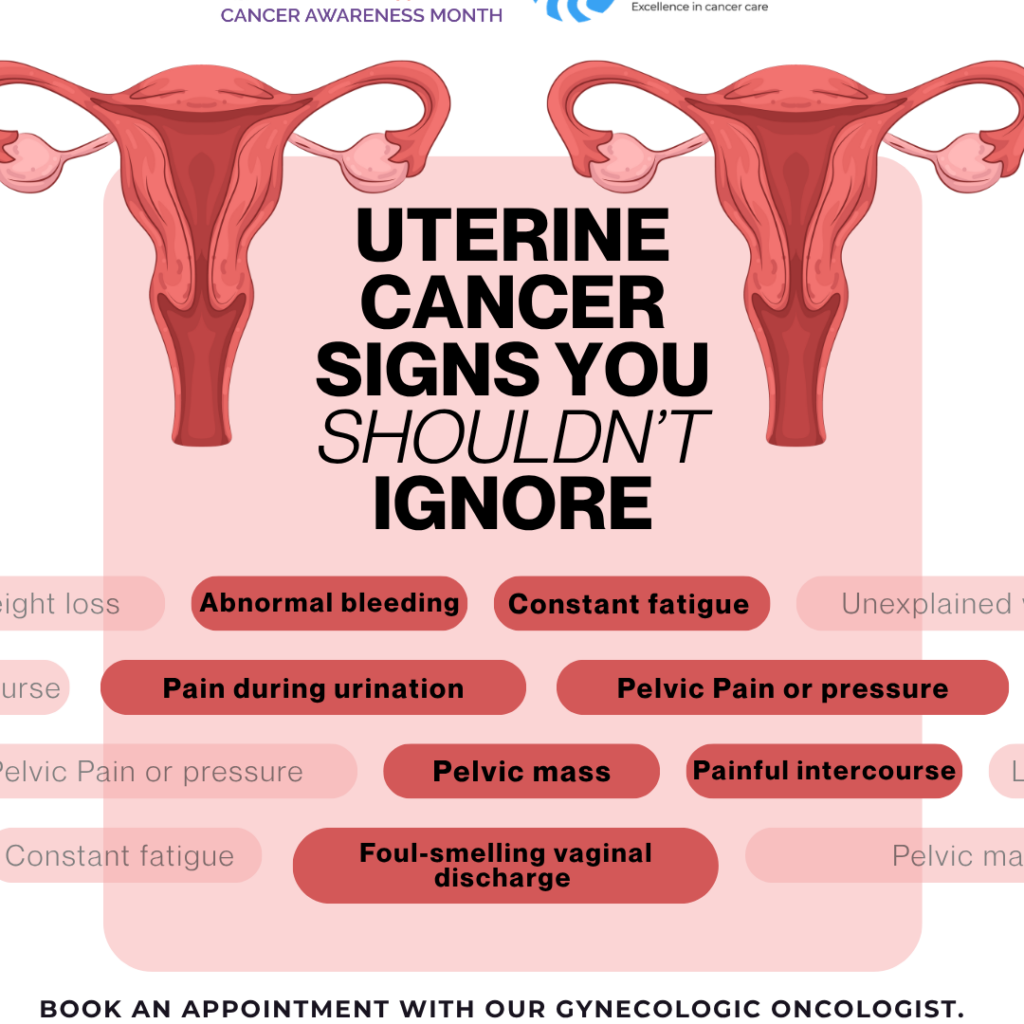
The most important warning sign is unexpected bleeding; particularly any bleeding after menopause. This is not normal. It should never be attributed to “just the change” or brushed aside. Other symptoms include abnormal or unusually heavy menstrual bleeding, bleeding between periods, pelvic pain or pressure, and extreme unexplained fatigue.
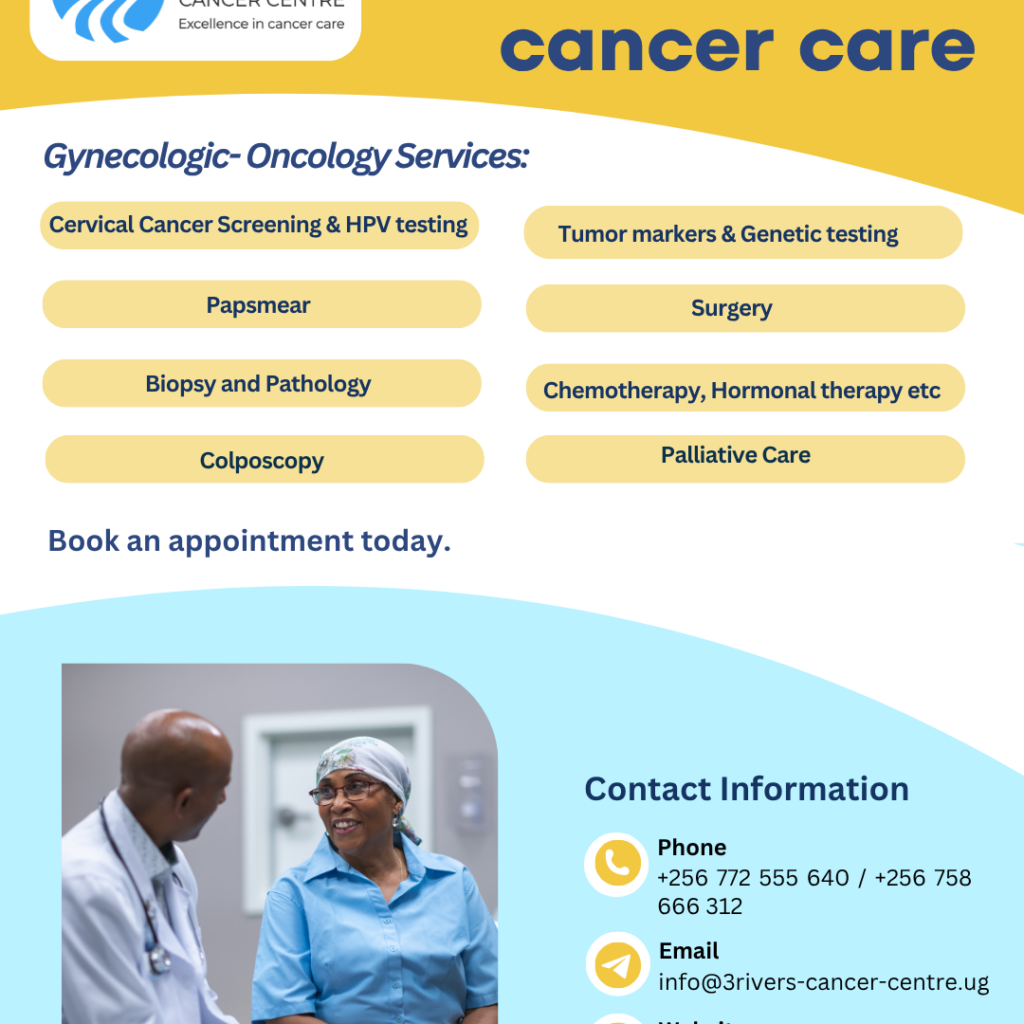
If you experience any of these, please come in to be reviewed by our gynaecologic oncologist.
The silence problem
Research from the International Gynecologic Cancer Advocacy Network found that nearly half of women affected by uterine cancer experienced stigma, shame, or misunderstanding from both loved ones and healthcare providers. (1) Symptoms were dismissed. Conversations were shut down. Diagnoses were delayed.
This is not just a Western problem. In our context, talking about the uterus, about bleeding, about anything below the waist, is often considered private to the point of being unspeakable. Women wait. They pray it passes. They are embarrassed to bring it to a clinic. And by the time they do, the cancer has had months, sometimes years, to grow.
We must change this. Gynaecologic health is not shameful. Abnormal bleeding is not a personal failing. It is a symptom, and it deserves to be taken seriously.
What you can do
If you are a woman, especially over 40, please know what is normal for your body. Do not normalise heavy or irregular bleeding. Do not wait long before seeking for a review by your healthcare provider.
If you are reading this and you know a woman who might be at risk: share this with them.
At 3Rivers Cancer Centre, we are committed to excellent cancer care where we share information with our patients ; one conversation, one consultation, one diagnosis at a time.
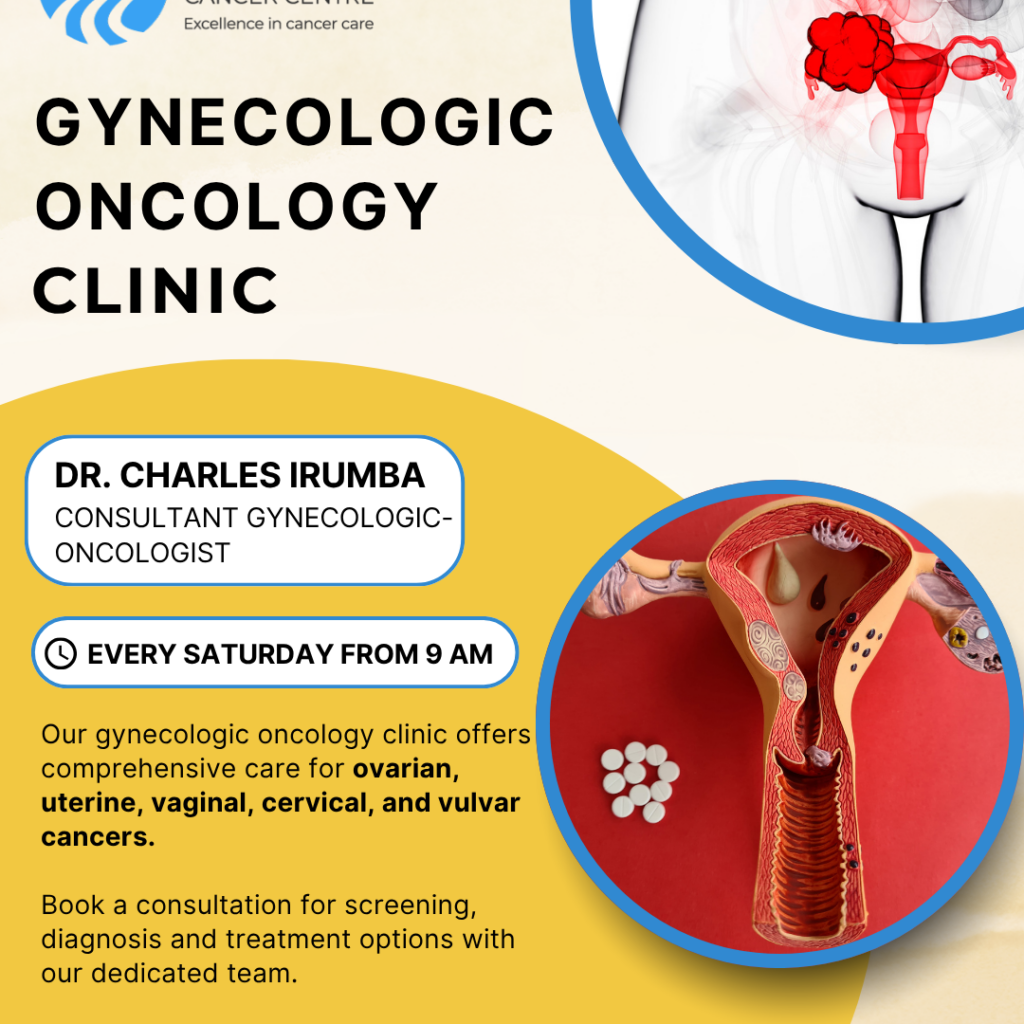
Our Gynecologic Oncology Clinic is run on Saturdays from 9am by Dr Charles Irumba, M.B.Ch.B, MMED (OBS&GYN), Pg. DPPM, F.GYN-ONC.
To book a consultation with our gynecologic oncologist or for more information, contact us on +256772555640. We are located at Africourts Building, Buganda Road, Kampala.
Written by Dr. Joy Mueni | 3Rivers Cancer Centre
Sources:
(1) International Gynecologic Cancer Society (IGCS). Uterine Cancer Awareness Month Toolkit 2026. igcs.org/ucam
(2) Shedding Light on Endometrial Cancer in Africa: A Systematic Review. Infectious Agents and Cancer, 2024. doi:10.1186/s13027-023-00563-2
(3) Burden, Regional Trends and Risk Factors of Breast, Cervical, Uterine, and Ovarian Cancers in Sub-Saharan Africa, 1990–2023: The Global Burden of Disease 2023. International Journal of Environmental Research and Public Health, March 2026. doi:10.3390/ijerph23040419
(4) Kassimo BA, Yahaya JJ, Othieno E, Okwi LA, Odida M. Endometrial cancer and associated risk factors among non-pregnant women with abnormal uterine bleeding in Kampala, Uganda: a 7-year experience from a Single Institution. African Health Sciences, June 2025. PMC12361943